Right on Track: A Visit to the Ellis Railroad Museum in Ellis, Kansas
Join me on a heartfelt exploration of the Ellis Railroad Museum, where local history and hidden gems await to be discovered.
Some places invite you in with bright signs, polished exhibits, and carefully planned displays.
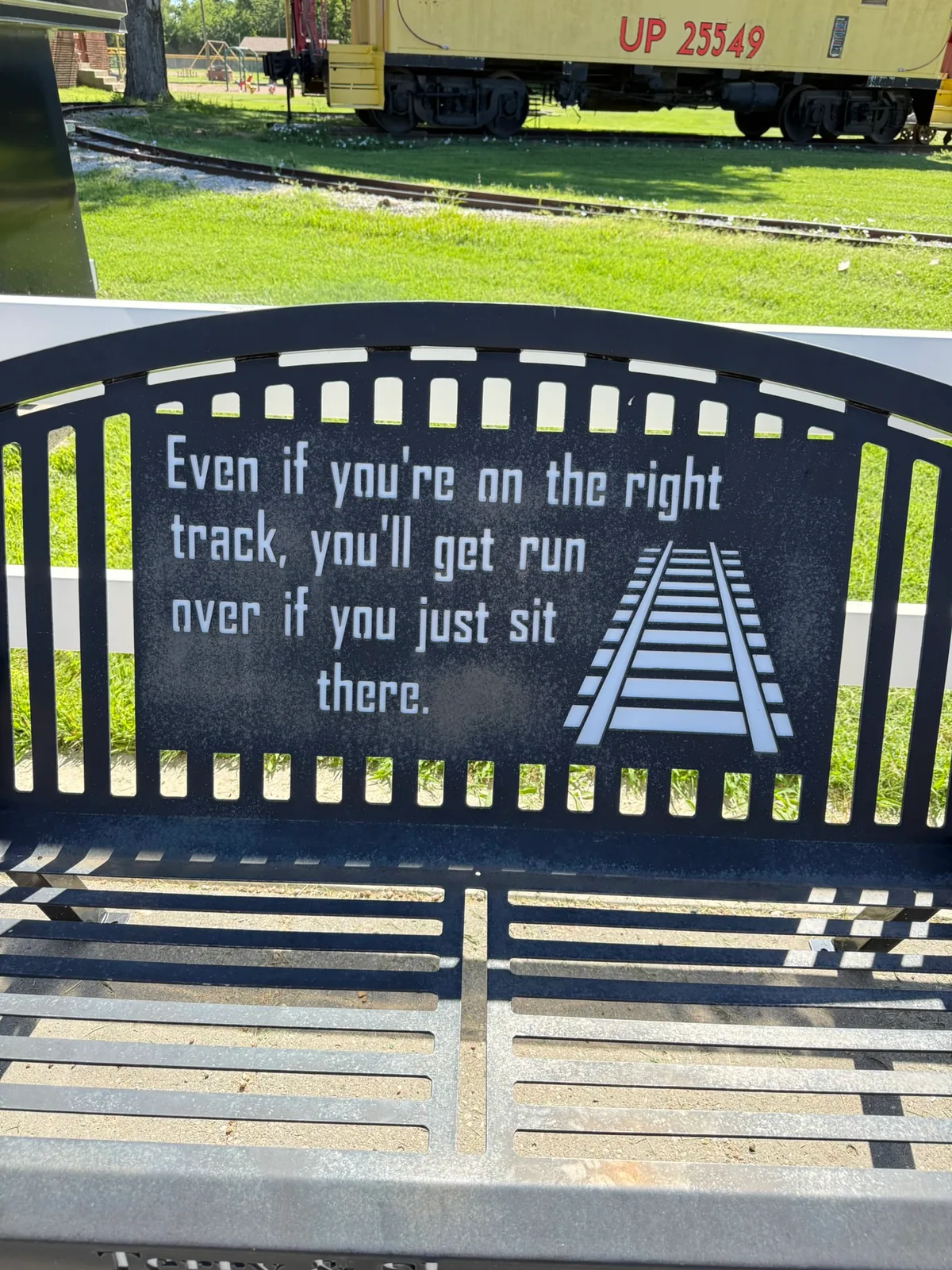
The Ellis Railroad Museum welcomed us with a bench.
Not just any bench, either. This one carried a reminder that made us stop before we even walked through the door:
“Even if you’re on the right track, you’ll get run over if you just sit there.”
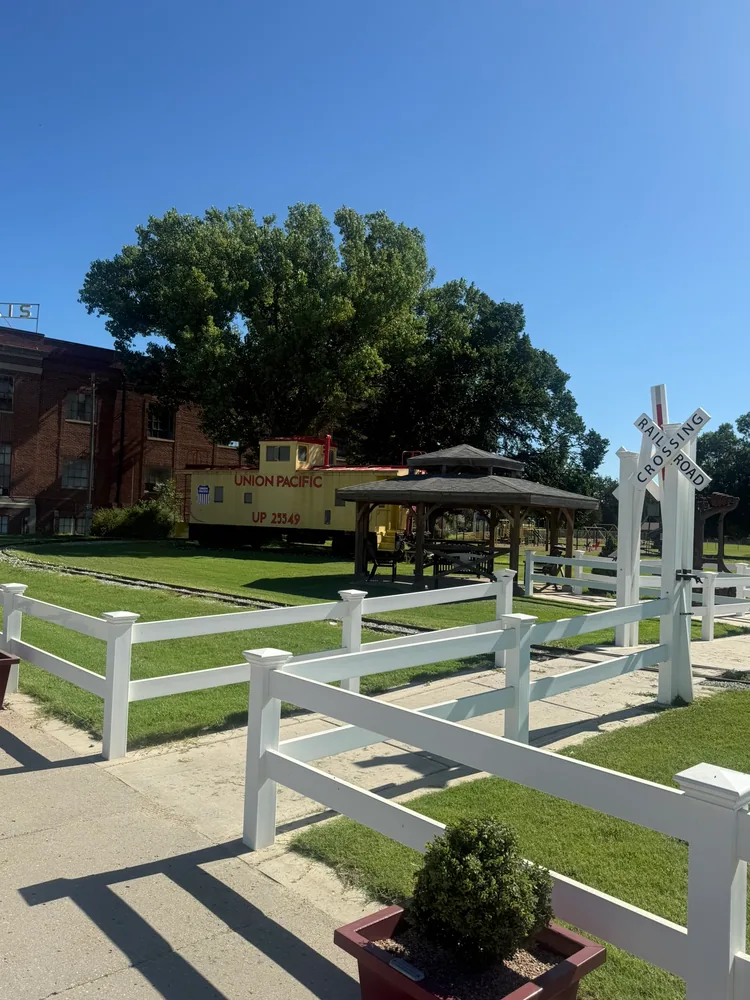
The quote, commonly attributed to Will Rogers, felt especially fitting beside the railroad tracks and the bright yellow Union Pacific caboose sitting nearby.
It was also a good reminder for travelers.
You can follow the right road, keep a full schedule, and make excellent time, but you may still miss something worthwhile when you never stop long enough to look around.
So, we stopped.
And inside the Ellis Railroad Museum, we found far more than we expected.
More Than Trains and Tracks
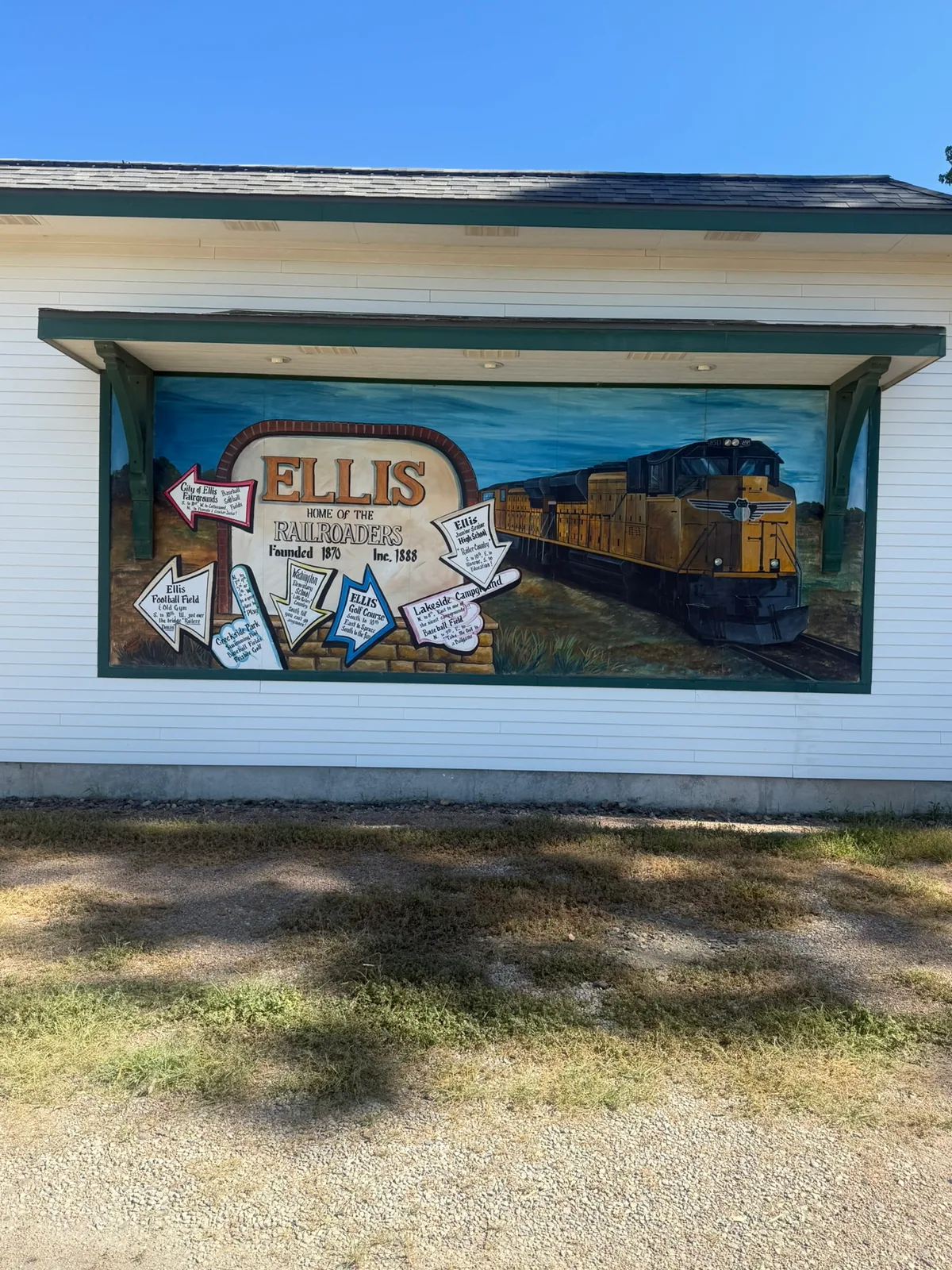
The Ellis Railroad Museum preserves the story of the Union Pacific Railroad in Ellis, Kansas, along with the history of the town and surrounding community.
Railroad artifacts are certainly an important part of the collection, but the museum reaches well beyond locomotives, cabooses, and train schedules.
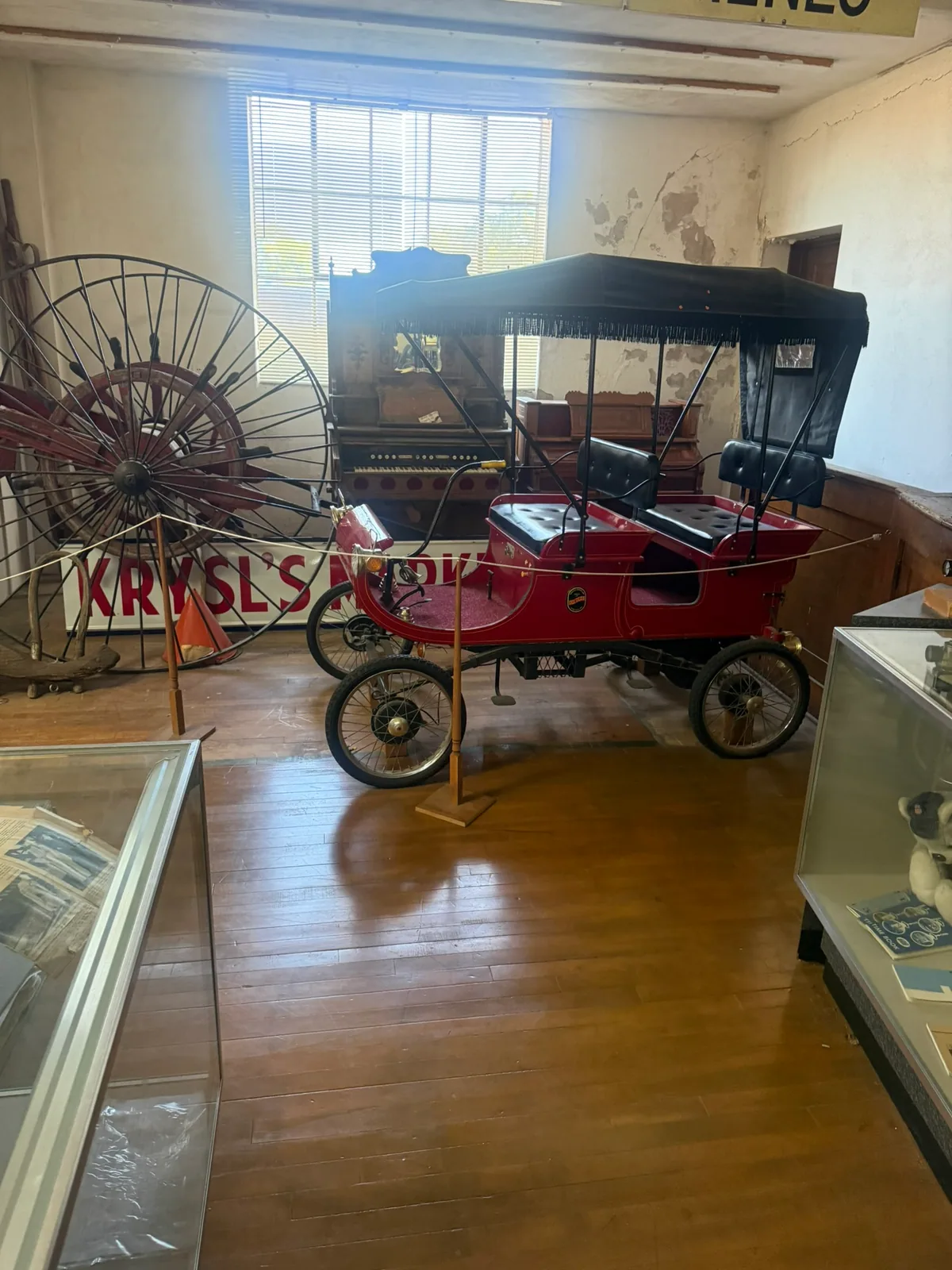
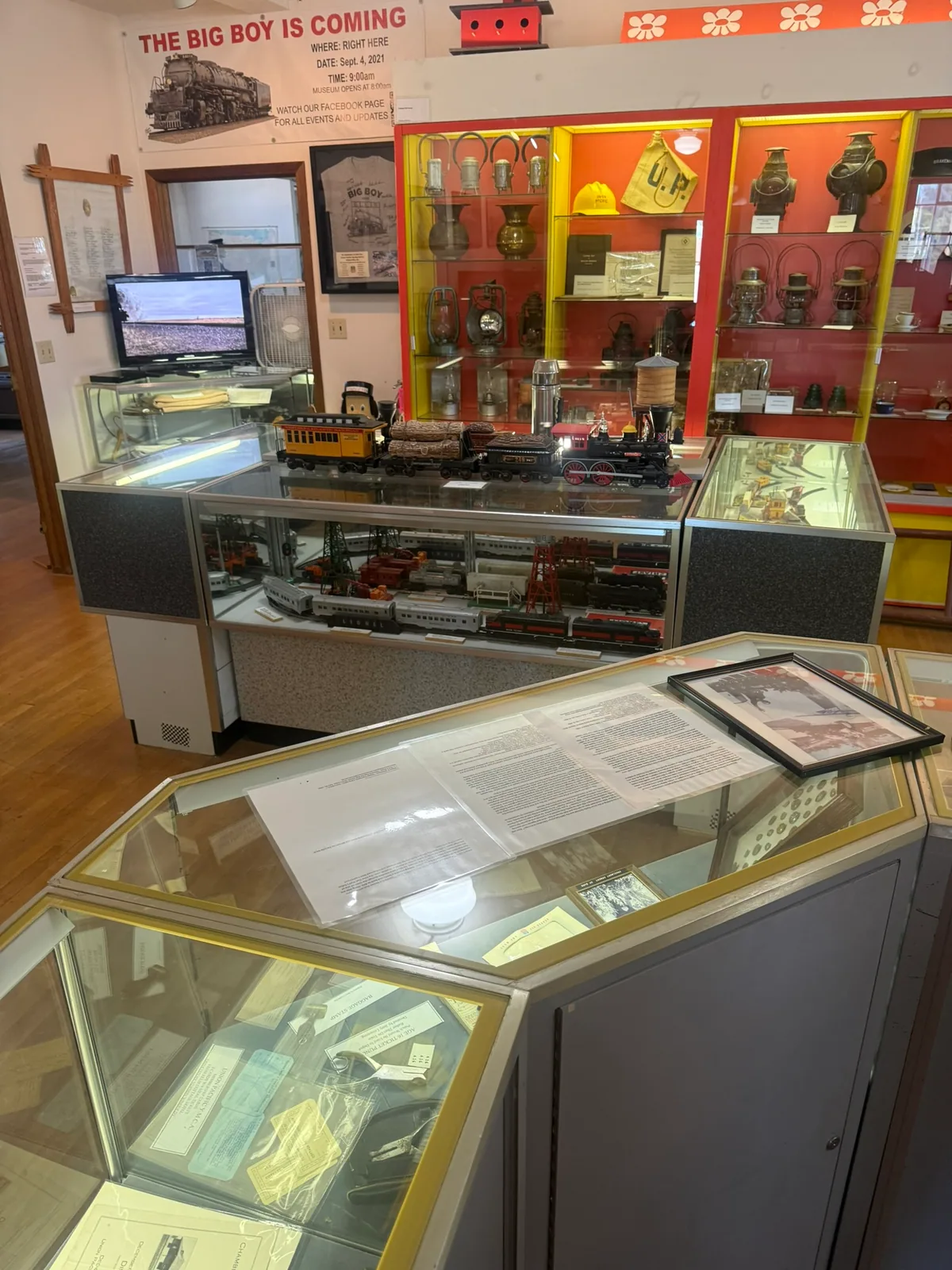
Its four rooms hold photographs, documents, telephones, lanterns, tools, household equipment, musical instruments, local records, and objects connected to the daily lives of the people who called Ellis home.
This is not a large modern museum filled with touch screens and wide-open galleries. It feels more like stepping into a community collection that has grown over time.
There are artifacts nearly everywhere.
Some are carefully arranged inside display cases. Others sit together in rooms filled with equipment from earlier generations. A quick walk through would not do the collection justice because many of the most interesting objects are the ones tucked between larger pieces.
The museum encourages you to slow down, look closely, and wonder what each item might have witnessed.
A Rifle in the Railroad Museum?
Among the artifacts, I stumbled upon an unexpected treasure: a 1878 U.S. Springfield .45-70 caliber Trapdoor rifle. I chuckled to myself, thinking, “Who knew that a railroad museum would have a Springfield Trapdoor rifle?” At first glance, it seemed out of place, but its story is deeply intertwined with the community’s narrative.
A Train Made from Pepsi Cans
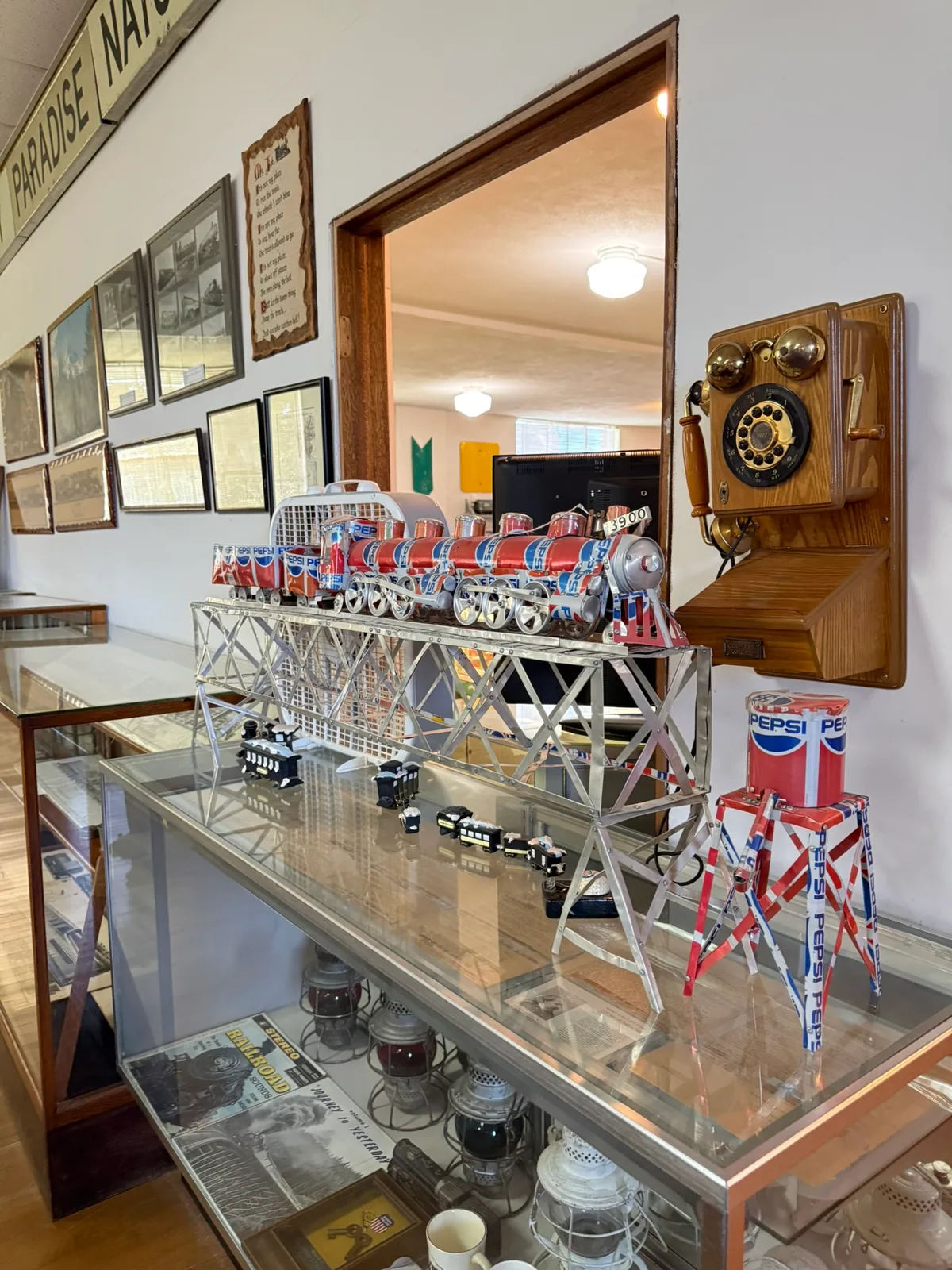
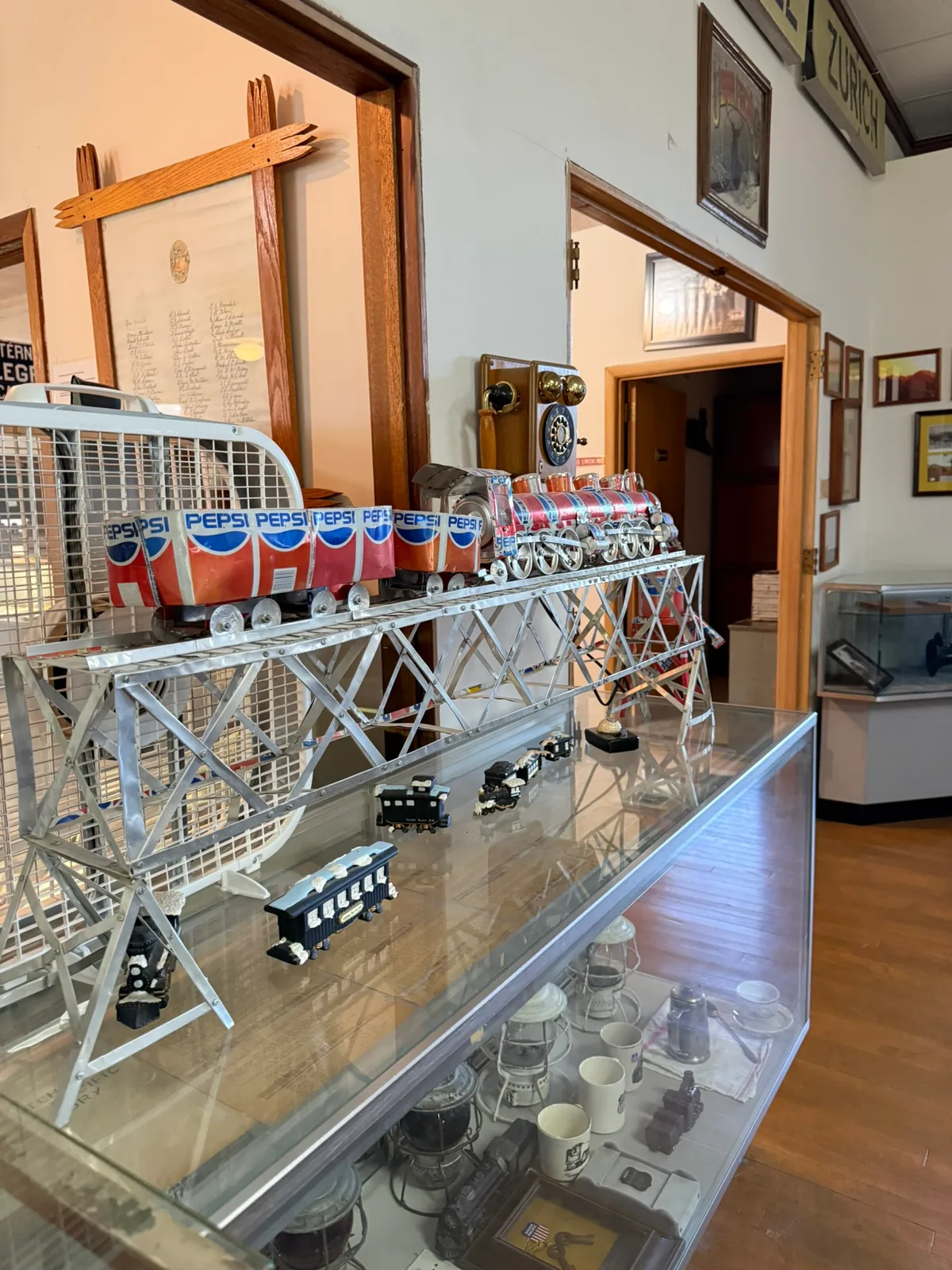
The handmade Pepsi-can locomotive immediately caught my eye, a quirky piece that encapsulates the community's spirit. Turning ordinary aluminum cans into a locomotive, cars, and a water tower is no small feat. It takes imagination and patience, qualities that resonate deeply in small towns like Ellis. This folk-art piece, while perhaps not historically significant in the grand scheme of railroad history, embodies the creativity and resourcefulness of its creators. It’s a reminder that art can emerge from the most unexpected places, and it adds a playful touch to the museum’s collection.
Everyday Objects Tell Important Stories
Railroad history is not only about steel tracks, engines, and freight schedules.
It is also the story of the people who worked for the railroad, raised families nearby, operated local businesses, and built their lives around the movement of trains.
That broader story appears throughout the museum.
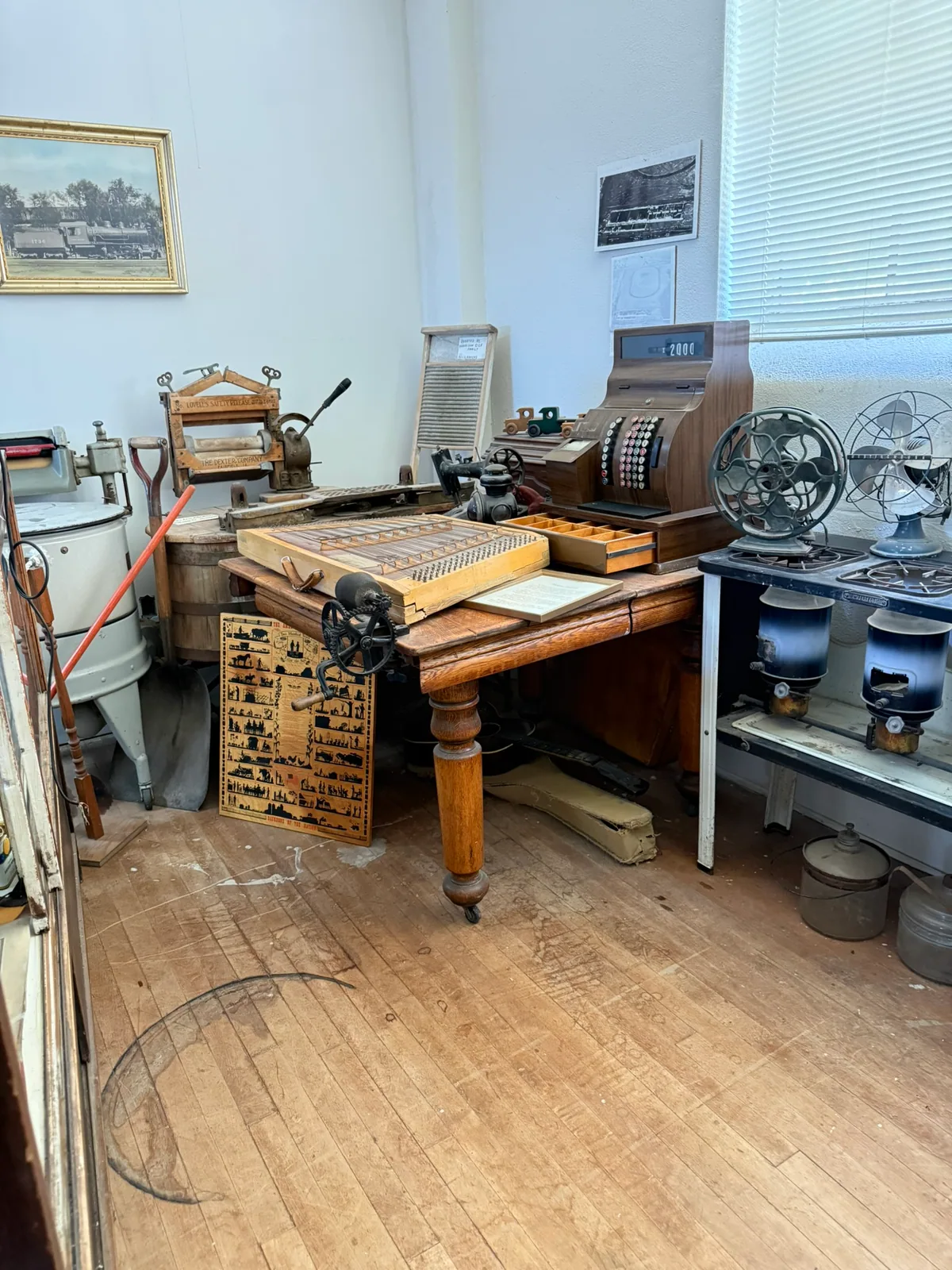
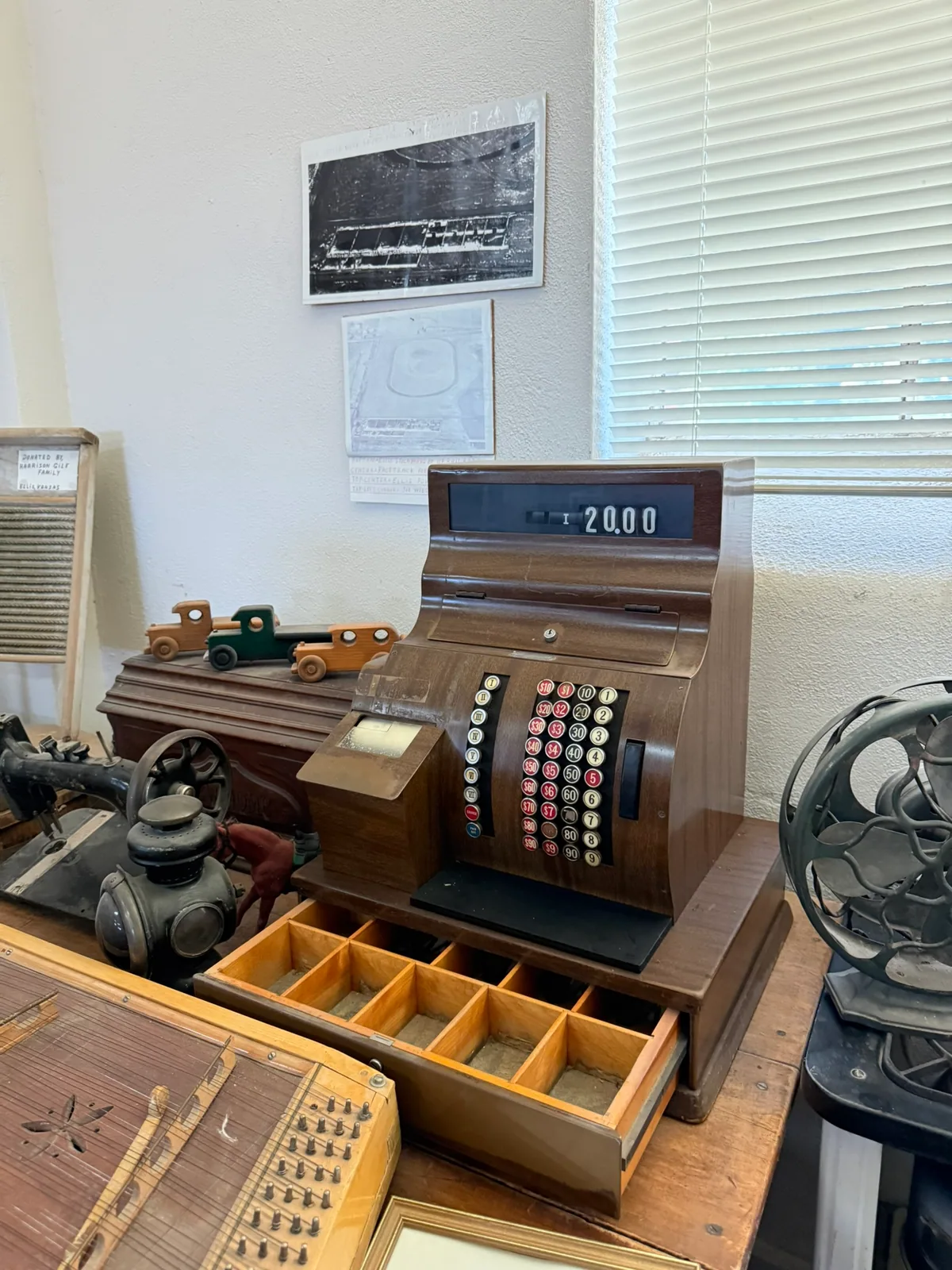
A wooden cash register sits with its money drawer pulled open, revealing rows of empty compartments that once held bills and coins. Nearby are sewing machines, an old washboard, a clothes wringer, electric fans, household tools, and equipment that once made everyday work possible.
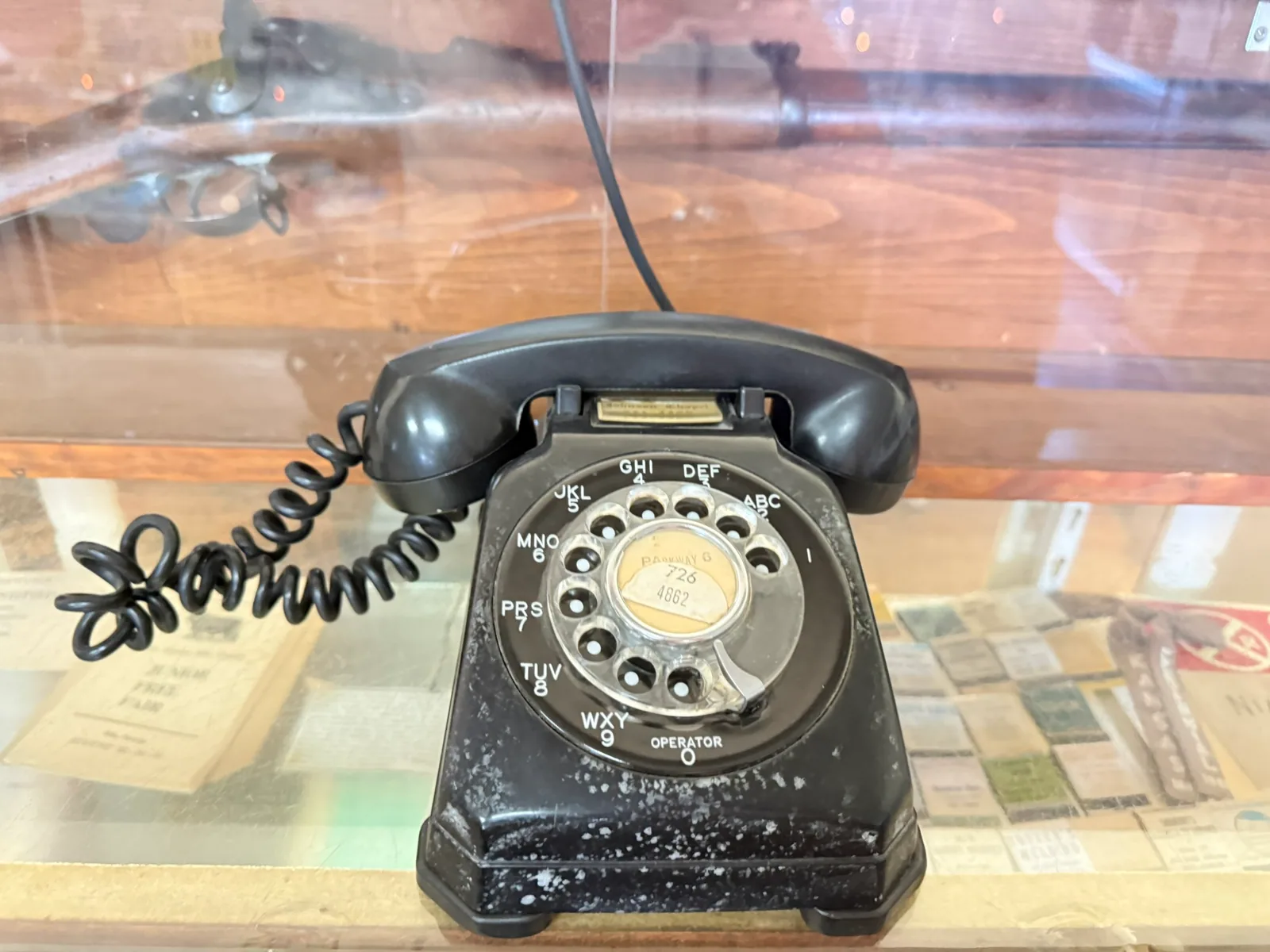
There are railroad lanterns, stacks of documents, tickets, photographs, and a black rotary telephone marked “Railway 6.”
The telephone immediately brings to mind a time when communication required more than tapping a screen. Someone had to pick up the receiver, turn the dial, and wait for the call to connect.
The room also contains a hammer dulcimer, a beautiful wooden instrument with rows of strings stretched across its surface.
Placed among the cash register, washboard, sewing equipment, fans, and tools, it is another reminder that life was not made up entirely of work. People also made music, gathered together, and found ways to enjoy the hours after the day’s responsibilities were finished.
A Rifle in the Railroad Museum?
Who knew that a railroad museum would have a Springfield Trapdoor rifle?
Displayed above the rotary telephone is an 1878 U.S. Springfield .45-70 caliber Trapdoor rifle.
At first, it may seem like an unusual object to find in a museum devoted largely to railroad and community history. However, the information displayed with the rifle explains why it belongs there.
According to the museum label, the rifle originally belonged to the Grand Army of the Republic’s George Ellis Post 171. It was the last known rifle associated with the GAR post in Ellis.
The rifle eventually passed into the possession of the American Legion Post of Ellis. When that post closed in September 1993, a group of Ellis residents purchased the rifle at auction so it could remain in the community and be placed in the Ellis Railroad Museum.
The label also states that Will Johnson of Hays, Kansas, restored the rifle in 2012.
Its presence is not really about adding a firearm to a railroad collection.
It is about preserving a piece of Ellis history.
The rifle represents local veterans, community organizations, and the people who understood that once an important artifact leaves town, its connection to that community may slowly disappear.
Someone cared enough to keep that from happening.
Preserved Because Someone Cared
That sense of care can be felt throughout the museum.
Many objects survived because someone decided they were worth saving.
A family held onto an old photograph.
A local resident preserved a tool.
Someone donated railroad documents, household equipment, or a telephone instead of allowing those objects to be discarded.
Others gave items in memory of someone they loved.
Museums like this are built one object and one story at a time.
A cash register might appear ordinary until it becomes one of the few remaining reminders of how a local business once operated. An old lantern may seem worn and outdated until it helps explain the work performed beside the tracks after dark.
Even a washboard, sewing machine, fan, or musical instrument can become part of a much larger story.
These objects show how people worked, communicated, traveled, managed their homes, entertained themselves, and helped shape the community around them.
Without someone choosing to preserve them, those stories could have quietly disappeared.
Outside Beside the Tracks
The experience continues outside the museum.
A bright yellow Union Pacific caboose, numbered UP 25549, stands near the tracks. Its size and color make it difficult to miss, especially against the green grass surrounding it.
The restored depot and other railroad features help connect the indoor displays with the larger story outside.
The museum also offers the BK&E miniature train attraction. The train generally operates seasonally and depends upon suitable weather, so visitors planning a trip specifically for the ride should check the museum’s current schedule before traveling.
There is also a gift shop and a doll display, adding even more variety to a place already filled with unexpected finds.
The Kind of Place That Rewards Curiosity
The Ellis Railroad Museum is a worthwhile stop for anyone who enjoys railroad history, small-town museums, antique equipment, local stories, or unusual handmade displays.
It is especially enjoyable for visitors who like to take their time.
This is not a place where you rush from one major attraction to another. The experience comes from studying the details.
Look at the old photographs.
Read the labels.
Notice the names written on documents.
Study the tools and try to imagine how they were once used.
Pause beside the telephone and think about the voices that might have traveled through it.
Smile at the Pepsi-can train.
And yes, take another look at the Springfield rifle that somehow found its way into a railroad museum.
The length of the visit will depend on how curious you are. Someone could walk through quickly, but those who enjoy examining artifacts and discovering small details will find plenty to keep them interested.
Do Not Just Sit There
That brings us back to the bench outside.
“Even if you’re on the right track, you’ll get run over if you just sit there.”
It may have been intended as a clever railroad joke, but it also carries a little travel wisdom.
Sometimes we become so focused on the next destination that we forget to notice what is right beside the road. We follow the route, watch the mileage, and think about where we are supposed to be next.
But some of the best discoveries are not waiting at the final destination.
They are found in small towns, inside community museums, beside old railroad tracks, and among objects saved by people who understood that their stories still mattered.
The Ellis Railroad Museum gave us a look at trains, tools, telephones, veterans, families, creativity, and everyday life in the community.
All because we stopped.
Sometimes chasing the sun means covering miles. Other times, it means stepping off the road long enough to discover the stories that have been waiting beside the tracks.
Share this article
Help someone else find this post
Share it to your favorite platform, email it directly, or copy the link for your next post or message.
Chasing the Sun offer
Turn Any Road Trip Into an Adventure
Designed for families, couples, and solo travelers, this free Road Adventure Hunt adds fun, interaction, and meaning to any trip. Inside, you will get a printable hunt, easy road games, and memory making prompts that help you notice more, laugh more, and enjoy the journey together. It is the right next step if you want something practical, fun, and ready to use before your next drive.
- Fun scavenger hunt prompts you can use anywhere
- Easy road games that make travel time more engaging
- A printable activity that helps create lasting memories
Reader reflection
What part of this article feels most meaningful to you right now, and what is one small next step you can take?
Pause for a moment and think about what stood out to you most. Connect that idea to your current situation, then name one simple action you are willing to take next.
Public reading stays open. Private reflection requires a member account so you can save your thinking and come back to it later.